Letter III to Alex: On the Video Game as the New Novel

Alex,

On this ground you surely understand that you are the teacher and I am the student. Nonetheless, I will do my best to respond.

You see, the most I know of video games is that they exist. I suppose my initial reaction would be to advise you against them but you seem quite adamant they have something of use to the philosopher. And I’ll be damned, it is something useful that you are connecting with your friends abroad through them. I have always thought one could not understand humanity through the eyes of a homebody so I am glad you keep in touch with those across the pond.

Still it surprises me that you believe, “the video game can cut through the heart more than a film or television series” for I am recalled to the days when I was a young man drawn more to the theatre than my anthologies. What’s more, I never imagined the source of my pride in your growth might be linked to video games? To be clear, I believe you are talking as serious as a paradigm shift in the relation of philosophy.

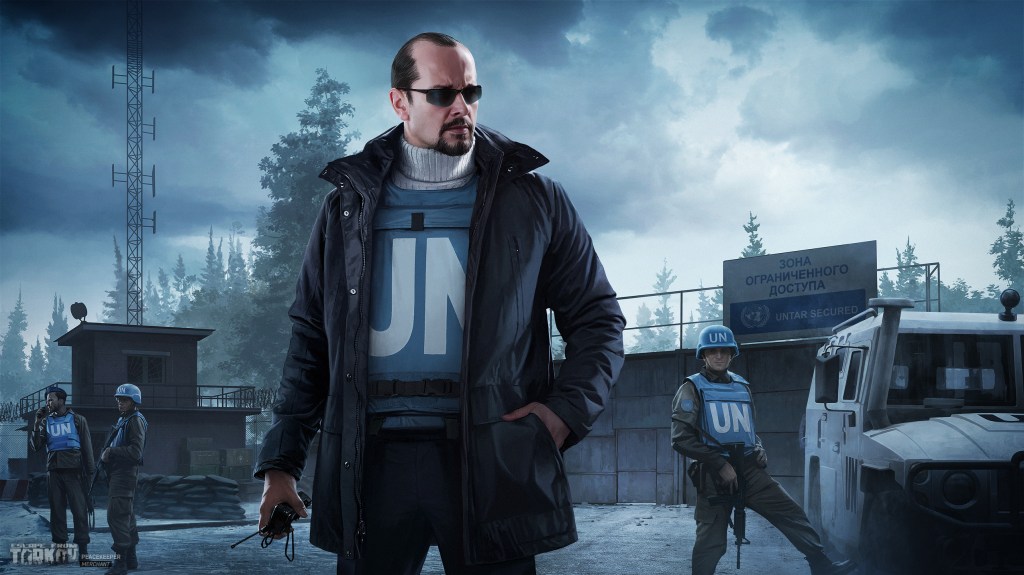
The worlds you describe to me sound something like what Middle Earth is to her: a playground. And it sounds as though the developers have come out to bat. Take this Tarkov you have told me about. Nikita seems a Dostoyevsky and his Tarkov a truly Hobbesian (or Orwellian?) place. And Tamriel? Sounds ripe for a hero’s journey not unlike the Hobbits’.

But a piece of loose garbage could be a philosopher’s playground, no? I could make an analogy between man and the stray trash unnoticed amongst the city bustle, no? We could call a recycled bottle the body of the starchild, right? I only tease. Let me talk to your strongest points:

You have made the case that in the video game, the player (the reader of sorts), experiences the world in a less tertiary sense and, as you have pointed out, that makes the philosophy more intimate. With this first assertion, I am no longer sure I could call cinema it’s own paradigm shift for, in film, the viewer is really afforded a role no closer than in the novel. They are still spectators, inconsequential to outcome. Likewise, the fallout only befalls them in the third degree. But in a video game, the player may be as consequential as the artist.

Now, to your second point that these games have infinite playability, I think you drive home the substance and potency of this medium. You read a novel and it is likely to end up our piece of garbage from earlier. But you live through Tamriel for months and years (as the kids are already doing of their own accord anyways) and it steals a place in your heart.

You have yourself a big fish here. I am unsure whether this ground is much traveled by academics. They wouldn’t dare stray their elitist eyes from their books for a teenage vice, would they? Nobody is willing to come right out and say that the video game can and already is a vessel for philosophy…but you. So write me something of Tarkov or Tamriel. At least to assure me this isn’t some scheme to avoid your studies!

Regards,

Liber

Letter II to Alex: On Community, Churchgoing, and Literature

A portrait of American author Herman Melville

Alex,

You are right and, if you will allow me to generalize that writers tend not to be churchgoers, I would like to share my thoughts.

There is little community in intellectual and academic circles compared to those of the church…not that one cannot belong to both. Indeed, being an atheist or something other my whole life, and now searching for community in academia, I assure you there is little. The peer-reviewed journal is the closest to a potluck we have and the dishes do not taste of love. No, they are pungent! At worst, you may sense your colleague spat in their dish hoping you and your thesis would have a great bite of it. Still, if only to find the most abhorrent plate, we do have a common goal: the pursuit of truth and wisdom. So fill yours.

But I would hardly be a tutor to leave you with that, no? So here is my advice: go to church if you are seeking fellowship (you may also find something more to believe in). And if you’re not looking for fellowship, go to church. Believe me you’re likely to feel robbed of an education if you don’t and, in a few years, you will find yourself a frequenter to the abbreviated bible: the footnotes. Yes, perhaps out of pride and spite I also gave up church and the books. But nobody warned me that Melville would allude to Jonah and the Whale, and Ishmael, and Elijah, and Job, and Nineveh, and all the grand tales.

Still, let me not just advise you to study the bible, but to become a student of all the texts. Indeed, nobody told me Thoreau was a student of Hinduism. Sure, I could have guessed that Japanese literature would be Buddhist to some extent, but I never could have guessed I would tire of turning to the endnotes. So heed my recommendation to learn of all faiths, or don’t. But I’m sure if literature could be measured like a recipe, you would retrieve your recipe from the ancient books.

Regards,

Liber

Clash of Crane: “The Black Riders and Other Lines”

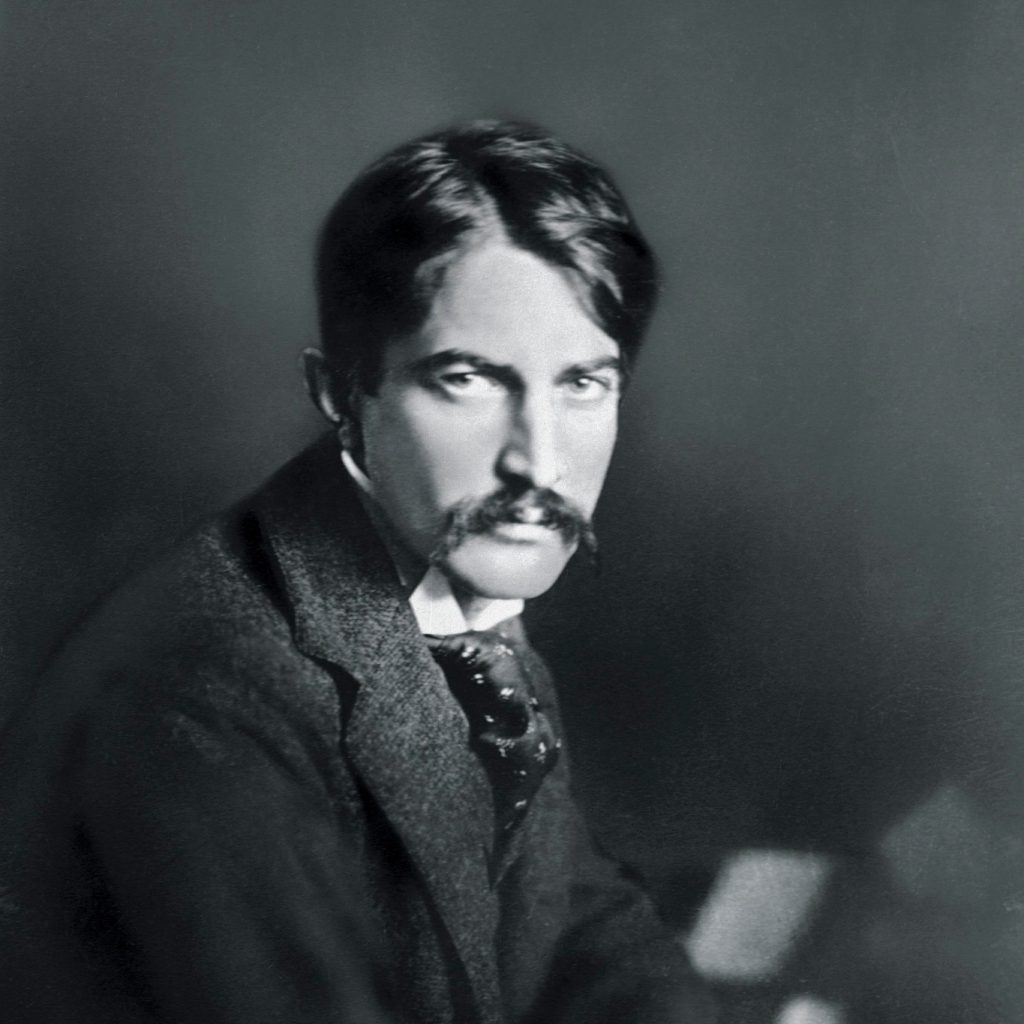
As I have previously mentioned, I have a complicated relationship with poetry. But I suppose if this is to be a page dedicated to art and especially literature, I cannot possibly neglect it. For that, I would like to take a look at two of Steven Crane’s poems from the The Black Riders and Other Lines which I find most interesting on their own but even more so when contrasted like the black and white of Crane’s portrait. First, we will take a look at the warming XVIII.

In heaven,
Some little blades of grass
Stood before God.
“What did you do?”
Then all save one of the little blades
Began eagerly to relate The merits of their lives.
This one stayed a small way behind, Ashamed.
Presently, God said,
“And what did you do?”
The little blade answered, “Oh my Lord,
Memory is bitter to me,
For, if I did good deeds,
I know not of them.”
Then God, in all His splendor,
Arose from His throne.
“Oh, best little blade of grass!” He said.

XVIII, The Black Riders and Other Lines by Stephen Crane

Right, I believe warming or optimistic are good adjectives to describe that poem. A God pleased with the most humble of his servants? What more could humanity wish for? But do not let Crane take you by surprise, for XXV seems anything but optimistic.

Behold, the grave of a wicked man,
And near it, a stern spirit.
There came a drooping maid with violets,
But the spirit grasped her arm.
“No flowers for him,” he said.
The maid wept:
“Ah, I loved him.”
But the spirit, grim and frowning:
“No flowers for him.”
Now, this is it-
If the spirit was just,
Why did the maid weep?

XXV, The Black Riders and Other Lines by Stephen Crane

Crane seems to have found some cold contradiction inside the world of XVIII: imagine someone close to you who best fits the will of God. Now, imagine yourself, sinner you are. If they love you, and you are not to be by their side, what heaven could possibly await them?

But perhaps we would be shortsighted to call the poem purely cynical. The question in lines 10-12 might not be rhetorical, right? Well, I find that possibility even darker and more daunting for the only logical answer to the narrator’s question, if you could call it logical, is faith. Still, I won’t pretend to be an authority. I have not spent hours peering into these poems, or the collection as a whole. I am much too afraid to as of yet so I would be interested to hear your thoughts.

One thing is for sure though, I agree with Elbert Hubbard’s evaluation of The Black Riders and Other Lines, “The ‘Lines’ in The Black Riders seem to me wonderful: charged with meaning like a storage battery. But there is a fine defy in the flavour that warns the reader not to take too much or it may strike in. Who wants a meal of horseradish?” We could peer into these poems endlessly like somebody’s soul.

Letter I to Alex: On People, STEM, and the Humanities

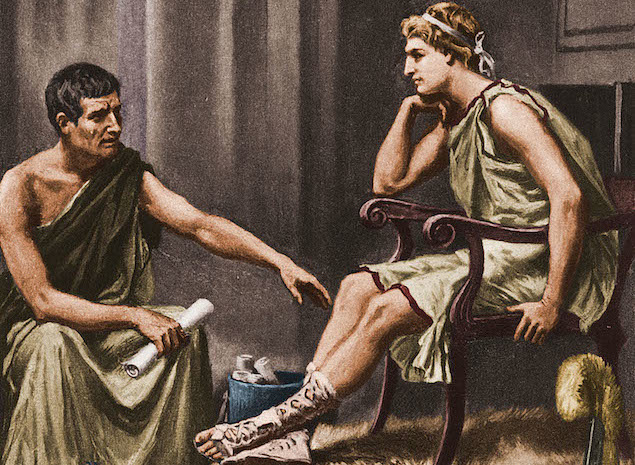
Aristotle tutoring Alexander by Jean Leon Gerome Ferris, 1895

Alex,

You have sought what I hope to be a just counsel regarding the role of the sexes in academia and, specifically, the humanities. It has been the subject of my conscience often and has occupied my subconscious since I first put pen to paper. So in due course, I hope to set you off well.

So they will call Alex a woman for writing poetry and essays in his journal? For reading Shakespeare and Tacitus? Well, recall to them that Alexander the Great was no stranger to strong words when he penned cowardly Darius. Remind them that Alexander neither fretted in the power of persuasion before the mutineers, nor strayed far from his tutor Aristotle as a boy. The same could be said of Caesar who read of Alexander and Grant who read of Caesar’s tears.

And if they should really be so backwards to think that power is what makes a man, remind them that it was no engineer who started the French Revolution; or, if it were, it was the “softer side” of their brain that played both fuse and fire for that monumental event. But why should we segregate such things to begin with? It’s the humanities, after all.

You see, your generation has before you a chance to correct not one, but two great missteps. For one, it would take a great philosopher and historian to explain what is at fault but the issue persists: somehow or other, men are fleeing the humanities at large since this last century and women have taken it up. Yet today, we hear that we need more women in STEM and, for my part, I will say we need more men in the humanities.

Most certain on this topic, though, is the root misstep. We began only with the renaissance man and regressed even from that. What notion is there of the renaissance man or renaissance woman today? Men should neglect neither half of their brains, nor should women for that matter. Remember, we were fools to think things would be for the better if we ignored the education of our daughters. Let us not allow invisible divisions to cast that mistake on both our daughters and sons.

My regards,

Liber

Reel Rookie: Art, Film, and “Barry Lyndon”

“The test of a work of art is, in the end our affection for it, not our ability to explain why it is good.”

Stanley Kubrick

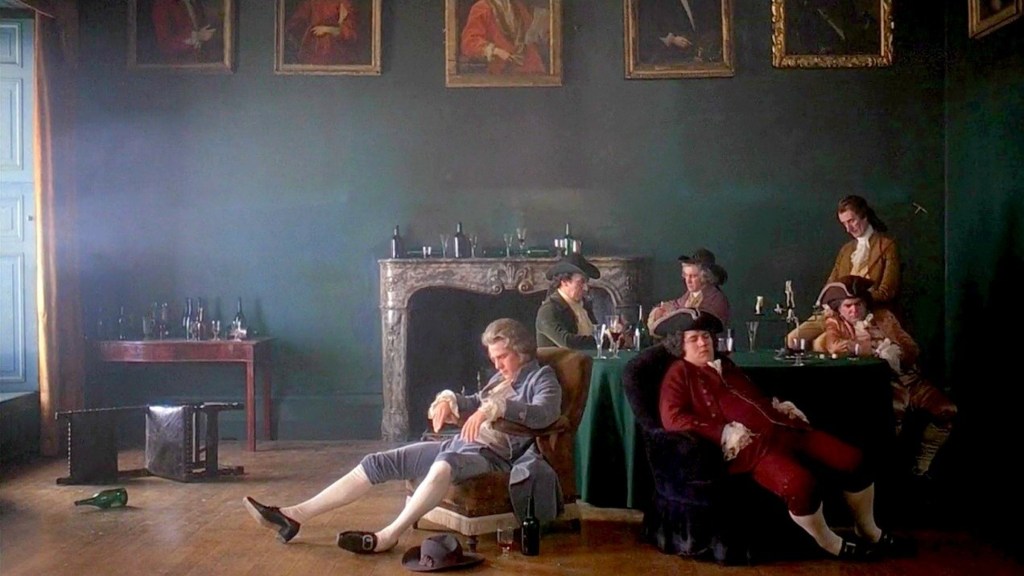
Criticizing, comparing, and understanding the infinitely complicated children of a genius is not an easy task, let alone the children of two geniuses. And so here I am on a Saturday, two weeks after a careful reading of William M. Thackeray’s novel, The Memoirs of Barry Lyndon, Esq., unsure what to write. So here I am on a Saturday, after a dozen viewings of Kubrick’s film Barry Lyndon, one of my all-time favorites, unsure what to write. I am not qualified to tell you about the technical marvels of the film, nor am I an actor or photographer. And still, as a writer, it is not easy to tell you what the novel has in store. But Kubrick really throws me a bone with that quote, “Just do your best,” he seems to be saying. And so I will, even if it comes down to stating my simple affections.

I think it is best to start this week’s review where the film began, with the novel. A dusty old Oxford World Classic, one might see the iconic white stripe on the cover, remembering that some horribly boring poetic dialogue they read in high school belonged to the same banner. But it shouldn’t be judged as such for it’s actually terribly approachable and entertaining like much writing of the same time period.

And believe me, like anyone, I was once intimidated by the ridiculous language, silly costumes, hideous makeup, and stern rules of those centuries; I suppose, until I was forced to read of them. What I found then was that I had been missing out on a miracle: two hundred years later we’re hilariously similar. Thackeray’s characters use the term “I O U” and love gambling, drinking, drama, and sex just like the rest of us. Mozart was into flatulent humor. Perhaps the industrial centuries are where we should draw the line between the humanity of old and new because it’s just too easy to see this novel played out today. Many of my old assumptions turned out to be false too. There is hardly any language barrier and the costumes are no more ridiculous than what you would see on the red carpet.

So I have no choice after that rant I guess, at the risk of greatly underestimating a critically acclaimed novel, but to try and sum it up. While Thackeray, according to the back cover, viewed the “true art of fiction” as “[representing] a subject, however unpleasant, with accuracy and wit, and not [moralizing],” you’re very likely to read it as a Christian novel. Peasant Redmond Barry, the protagonist and narrator, is far removed from the Irish gentry but clings onto the idea of his high birth. Barry’s pride, ambition, greed, adultery, and boldness takes him through several intense pistol duals, the seven years war, and to the top of every European court. The same qualities also become his tragic downfall as he tries to obtain a title of nobility and struggles to gain the affections of his snobbish pain-in-the-ass stepson, Lord Bullingdon. So you see, it’s pretty likely to read as some sort of Christian admonition or a novel of the seven deadly sins, like Crime and Punishment.

But Thackeray really does leave you to judge the moral of the novel. Indeed, it cannot be ignored that the protagonist is far from a Christian and all events are retold through his justification and narration. What’s sure though, is that by the end I was affected by the humor and grief and was glad to have it in my library.

Now, I’m sure by this point you are ripe to know how my tirade ties into the movie. Well, I am reminded of something Seneca wrote to Lucilius,

What an indisputable mark it is of a great artist to have captured everything in a tiny compass

Seneca, Letter LIII to Lucilius

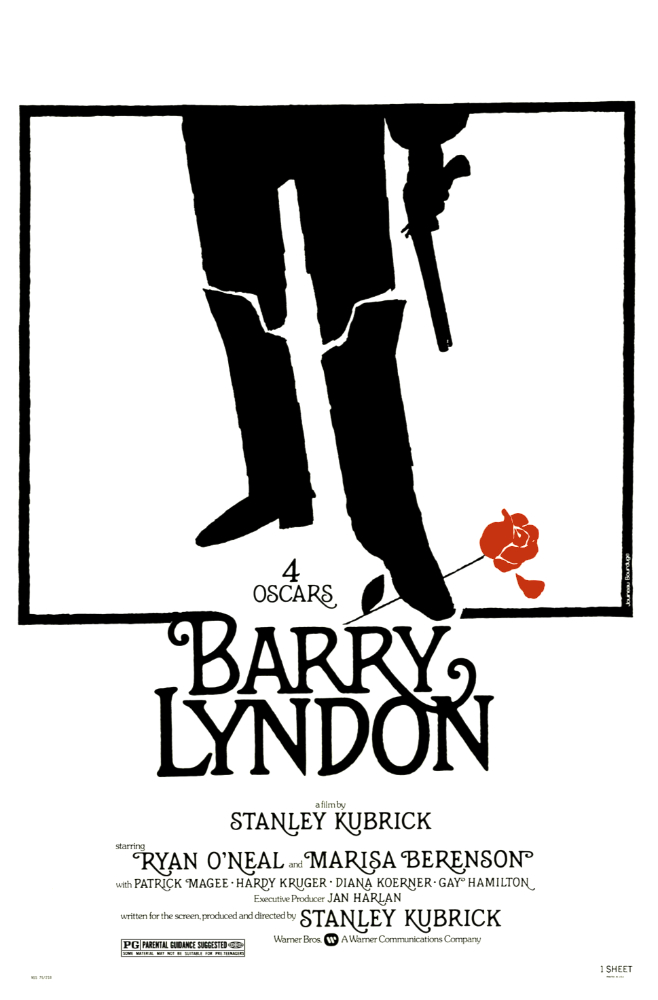
If the novel isn’t for you, the film surely is. Few people want to sit down and painstakingly read a novel they have no stake in (unless you’re a huge Kubrick and Barry Lyndon fan like me). As that fan, I will tell you that Kubrick makes the novel even more approachable and faithfully captures just about all of it in his compass. I mean every bit of dialogue is taken directly from the book and there seems to be hardly a piece of that novel missing. Yet, how much more the beautiful set pieces, camerawork, and acting represent than ten novels ever could. For all that, it feels like this movie is highly underrated and forgotten. Upon its release it won 4 Oscars, but today Kubrick is more well known as a skilled adapter for 2001, The Shining, and A Clockwork Orange. He ought to be remembered by this.

I have heard three YouTube essayists call the film a collection of renaissance paintings. Let’s not forget that it is also an entire novel and, like those other adaptations, a testament to the flexibility of the movie as a medium. It is infinitely inspiring and all for less time and money than a paperback oxford world classic. If you want to see the full potential of film, I love this work of art and I hope you will too.

Precious Registers: a Story…or Elegy…of Chess

“You thought that everything could be expressed with figures, formulas ! But when you were compiling your precious registers, you quite forgot the wild roses in the hedges, the signs in the sky, the smiles of summer, the great voice of the sea, the moments when man rises in his wrath and scatters all before him. […] Even when you are flushed with victory, defeat is knocking at your door. For there is in man an innate power that you will never vanquish, a gay madness born of mingled fear and courage, unreasoning yet victorious through all time. One day this power will surge up and you will learn that all your glory is but dust before the wind”.

Albert Camus, The State of Siege (1948)

Just as there are two armies on the board, black and white, there are two schools of thought when it comes to the categorization of chess: there are those who think it of the heart and, indeed, art…and then there are those those who see it as a science. But which side is victorious, if either, that is for you to decide.

The two army officers sat across from each other and before an ancient set of pieces in a rundown pub in St. Petersburg. They had been cadets there just a year before at the engineering college.

The first, Dmitri, was a disgruntled and sloppy officer. But in chess the rookie was a bit more cleaned up. Always trying new things, on some days he could force a beautiful checkmate with the right blend of vodka, insanity, and heart for this new game. He sat up straight, smirking, and enjoying his cigarette.

The other, Fyodor, was a straight arrow of an officer. He had been playing for years without idealism, always committed to the books and masters. The more consistent of the two players was hunched over, resting his chin on his fist, already calculating what his fifth move would be.

They were good friends but the latter had been somewhat of a chess instructor to the former for several weeks, and they had experienced their first division over the same.

You see, Dmitri was not easy to instruct. Unlike his professor, he was far too impulsive, or perhaps was too proud or drunk, to ever be keen on calculating more than a few moves or coming up with anything other than a general plan of attack.”

“E4?” Fyodor asked with a grin as Dmitri posted his first pawn, “The start of a textbook opening, maybe?”

Dmitri paused and responded with an air of secrecy “It’s unoriginal, I know…but not in the sense you think.”

“How so?”

With the grin of a child offering some smart mouth remark, and playing D4, Dmitri retorted, “Well, if I told you I’d certainly be beat.”

But it couldn’t have been more than four moves before he had to explain his undefended pawns in the center of the board, and, indeed, before Fyodor had obviously taken the upper hand.

“Alright.” Dmitri began, seeing his plan foil before his eyes, “I’ll tell you. You see, the game is somewhat of a metaphor for life, no? At least a metaphor for war? Well, since it’s so, I figured I could apply one of sly Hannibal’s tricks from Cannae. You see here how I exaggerate the weakness of my center, ready to envelop you once you take the bait?”

Fyodor looked up from the board, confusion and disappointment on his face.

“Well, you know it’s high risk and reward. It could end well for me.”

With a deep breath, veteran Fyodor did his best not to ramble on, “You’re more the Romans in that position than the Carthaginians. It’s not a real war. It’s an algorithm and you might want to play the book moves. Most of them are even vetted by the computers. You’ve heard news of the computers abroad and what they can do? Forget about their computers, what our computers have to say. Besides, if the game’s like any war, it’s some impersonal war of the future.”

“Using precious bandwidth to test chess moves? Here? In Russia?!”

“It’s quite a piece of propaganda you know, being the winner. Even Kasparov and Karpov like to use them to test positions.”

“Well, there’s little honor or spirit in that is there?” Dmitri asked sulking.

“Well, if everyone uses them? What do you do when your opponent brings cavalry to the battle? Bring your own, no?”

“Sure, but the Romans didn’t bring elephants to Zama. They outplayed them.”

“Soon enough, there won’t be outplaying a computer” Fyodor smartly retorted as he forked Dmitri’s king and rook.

Dmitri knocked over his king and shook hands with Fyodor. They sat in silence for a moment collecting their pieces. As Dmitri finished setting up his side, he grabbed some of Fyodor’s pieces to help him and began laughing, filling the immediate area with the smell of vodka, “They’ve even found a way to take the blood out of chess have they?”

“Right, for the players to some extent. But the best nation still wins. We are the ones who program the computers aren’t we?”

“As a soldier and gentlemen,” both grinned at that, “I wouldn’t have an engineer taking my plunder or trophy.”

“Fair enough. But remember there won’t be many trophies if you don’t study up on the computers. And forget the computers. You ought to read up on some literature at least to avoid blunders like that. You can borrow some of my books or I can show you.”

“I’m good.” Dmitri replied unsurprisingly, taking a long pause afterwards. “Scipio was born out of a great blunder, you know?”

“Pardon?”

“Scipio, he was one of only a few who escaped Cannae.”

“I wasn’t aware he was in that battle. I thought all the Romans had been slaughtered.”

“No, he was one of a dozen young men who made it out and, as you well know, beat Hannibal at Zama. He beat him against insurmountable odds too. Just what Rome needed after losing some 25% of their military-aged male population at Cannae. You realize how insane that is?” Dmitri asked in awe. “The Krauts capitulated after losing 5% in the First World War? For my part, a miracle of will like that is proof enough humanity will never be completely passed up by an algorithm.”

With a smile on his face, Fyodor obliged the drunk, “And for my part, I didn’t know it was possible to sound like Vodka. Come on, give me that piece so we can play again.”

“Just one win is a testament to the human spirit!”

Fyodor laughed, putting his last piece in position for battle, “Alright Scipio, only time will tell, huh?”

Dedicated to my friend and master in chess, Hunter

A Follow-Up to In Bruges: “On Raglan Road” by Patrick Kavanagh

“I will immortalize you in poetry, Hilda.”

Patrick Kavanagh

How could I review In Bruges without mention of the bewitching poem it features, “On Raglan Road” by Patrick Kavanagh?

I have somewhat of a love/hate relationship with poetry. In a sense, I find myself at opposition with the stringent rules and regulation that define so much of poetry. I think art should not be governed, but be governor. At the same time, perhaps I am just too lazy to learn and respect them. Undeniably though, the well structured “On Raglan Road” is one of the most beautiful tunes I’ve read and listened to and casts Ireland as an enchanted place of poetry. If you don’t like reading poetry, Luke Kelly’s cover from the film is most compelling and is embedded below.

Kavanagh and Kelly actually met at the Bailey Pub in Dublin. Kavanagh, with embarrassment, asked Kelly to cover his poem about a girl run away. Kelly did…and with much dignity.

On Raglan Road on an autumn day I saw her first and knew
That her dark hair would weave a snare that I might one day rue;
I saw the danger, yet I passed along the enchanted way,
And I said, let grief be a fallen leaf at the dawning of the day.

On Grafton Street in November we tripped lightly along the ledge
Of the deep ravine where can be seen the worth of passion’s pledge,
The Queen of Hearts still making tarts and I not making hay
Oh I loved too much and by such by such is happiness thrown away.

I gave her gifts of the mind I gave her the secret sign that’s known
To the artists who have known the true gods of sound and stone
And word and tint without stint for I gave her poems to say.
With her own name there and her own dark hair like clouds over fields of May

On a quiet street where old ghosts meet I see her walking now
Away from me so hurriedly my reason must allow
That I had loved not as I should a creature made of clay
When the angel woos the clay he’d lose his wings at the dawn of day.

Patrick Kavanagh
An interview with Kelly followed by “On Raglan Road”

As far as its usage in the film, I think it is quite self-evident. Kavanagh talks of his unrequited love, a sacrifice. Ken makes his own poetic sacrifice for Ray.

Reel Rookie: “In Bruges” by Martin McDonagh

Podcast with some friends.

**I love Quentin Tarantino. Believe me, my goal was not to criticize him.**

An Unholy Comparison

Last week, a colleague expressed his serious disdain of Quentin Tarantino. I had no idea people hated Tarantino. But, unknown to my friend, like so many supposed film “afficionados,” Tarantino was my world for a while. As the youngster with two film classes under my belt, I even committed myself to watching his entire anthology. But looking back through the hundred or so films that have graced me in the years since, Tarantino no longer sits atop the same pedestal on which I once placed him; or, at the very least, I no longer stand by to berate all who despise him.

I still adore his work and his idiosyncrasies of course, but a director has creeped into my life that I cannot help but adore just as well and maybe even offer up as an alternative to Tarantino. Indeed, some people need an alternative. They hate those Tarantino idiosyncrasies: his use of temporal disjunction, slow—sometimes snoring—pace (how many 2.5 – 3 hour movies can this guy put out?), and his insistence on hyper exaggerated violence. Martin McDonagh, thus far, has not demonstrated any of those most hated marks. Further, while I cannot put my finger on why save for the directors’ crossover in dark comedy, McDonagh seems to manifest some of the most agreeable aspects of a Tarantino flick.

Having seen McDonagh’s dark comedy In Bruges the most, I will here try and convince you it is a good starting point if Tarantino threatens you.

Plot and Analysis

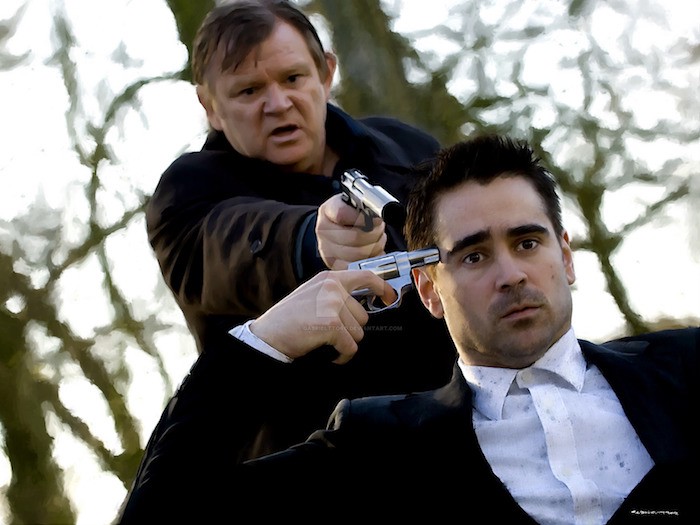
Compared to something like Pulp Fiction, the plot is simple and almost completely linear: aging mafia hitman Ken (Brendan Gleeson) and his childish apprentice Ray (hilarious Colin Farrell), are sent to the “fairytale” town Bruges, Belgium after a job in London goes awry. Specifically, after Ray kills a young boy by mistake.

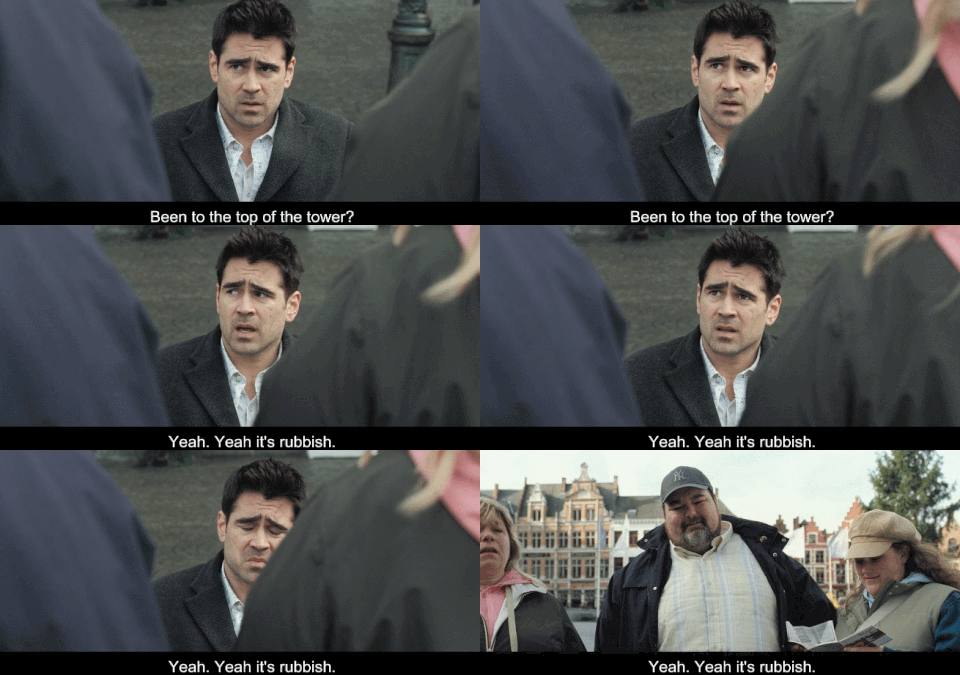
While Ken wants to ride the tourist pony show seeing the inside of every castle and waiting in queue for all the churches like any senior citizen, Ray “throws a fucking moody,” as they say on the other side of the pond, through all of it. For Dublin-born Ray, his opinion of the town and sightseeing is obvious even before he makes it clear,

“If I grew up on a farm, and was retarded, Bruges might impress me. But I didn’t, so it doesn’t!”

Still worse for Ken’s holiday, he is made to play the role of a father when Ray’s guilt-ridden conscience turns suicidal.

Through all their hilarious back and forth about whether to get pissed at the pub or go see another church, a dark turn blindsides the viewer. The boss orders Ken to kill Ray for the collateral damage. Softened since his younger days and thinking himself a father-figure to Ray, a moral dilemma follows for Ken: to carry on with the inflexible and vengeful rule that dictates mafia life or believe in life and change.  

Hilarity ensues but therein is the philosophy as well. The boss’s call is perhaps the epicenter of the serious questions posed by McDonagh: does it make any sense for ever-changing man to adopt a rigid morality? Does it make any sense for imperfect man to be so hell-bent on justice and vindication? These clear uncertainties are especially refreshing coming from a Tarantino film which does not simply pose a question through dialogue or action, but itself embodies postmodernist philosophies.  

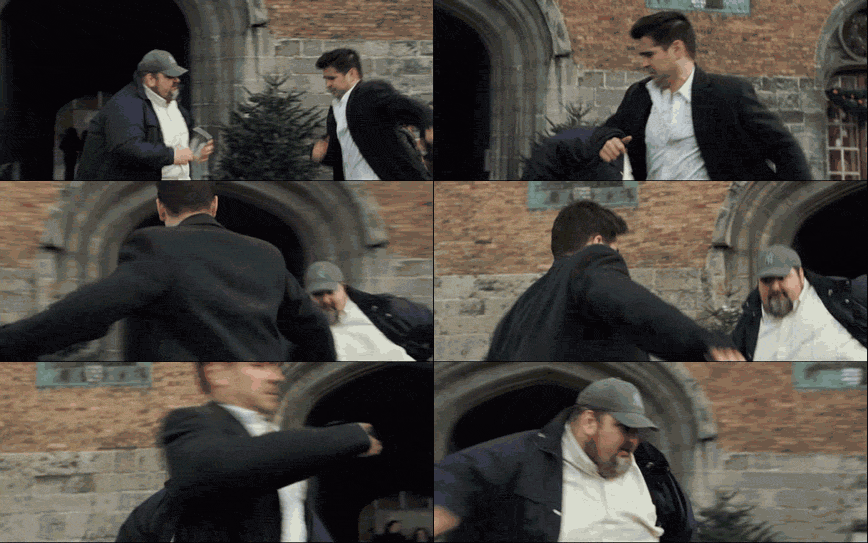
In many other ways, McDonagh is welcome coming down from a Tarantino high. His use of violence, for instance, is more modest and does not flirt with suspension of disbelief. Naturally, there are a few fist fights and the film culminates in a spectacular foot chase through Bruges’ Christmastime streets. Still, rest assured. No one gets killed with a flamethrower or a can of dog food like in Tarantino’s recent Once Upon a Time in Hollywood.

Further, the lack of the problematic Hollywood badass (think Cliff Booth from that movie or Lt Aldo Raine from Inglourious Basterds) also makes the film less immersion breaking. Compared to the unbelievable cool factor of Tarantino’s roles, Ray and Ken are outrageously human. They are not mere hitmen. They eat light yogurt, might wear the same shirt for three days straight, and might not know what an alcove is. I cannot remember the last time I could recall such everyday human details about a character.   

So, you see, In Bruges avoids the most polarizing parts of Tarantino and still does action and dark comedy in style. Moreover, McDonagh deals in some of the serious philosophical questions of generations. For that, I can give In Bruges my highly sought-after Reel Rookie seal of approval and recommend it to you. For my part and for the sake of comedy, I hope McDonagh’s string of successes made up of In Bruges, Three Billboards, and Seven Psychopaths is never ending.

This first review…dedicated to my film professors

Cicero on Scipio Africanus and Lonesomeness

“Publius Cornelius Scipio, the first of that family to be called Africanus, used to remark that he was never less idle than when he had nothing to do, and never less lonely than when he was by himself. We have this on the authority of Marcus Porcius Cato the Censor, who was almost his contemporary. It is a fine sentiment, as you would expect from so great and wise a man.”

Cicero, “On Duties”

In his treatise, “On Duties,” Roman statesman and philosopher Cicero bestows upon his readers this sentiment from the renowned general Scipio Africanus. Scipio believes that one ought never to feel lonesome or unproductive for, while one’s external world might be free of any responsibility or interlocutor, our conscience awaits conversation and wills that we better ourselves through reflection.

Henry David Thoreau shares a poem most evocative of this idea in Walden; or Life in the Woods. While I leave from this excerpt with a newfound dedication to aggressively rout boredom from my life, I feel touched by the miracle of connection in literature. Scipio’s simple sentiment survives Thoreau and, hopefully, this post.

The Battle of Zama which marked the defeat of Hannibal and Carthage…and for which Scipio is most famous for